Welcome Back Warblers
Spring is here in Texas and so are our friends, the Golden-cheeked Warblers!
As the days get longer and temperatures warmer, the Golden-cheeked Warblers make their way back to Central Texas. They spend the winter in southern Mexico and northern Central America. This northern migration is timed just right as caterpillars and other insects become more abundant, which is important because insects are their main food.
Golden-cheeked Warblers are particular about where they live. They build their nest in forests with mature Ashe Juniper and oak trees. Only the strips of a mature Ashe Juniper tree bark will do for their nests. Because this type of forest is limited only to Central Texas, the warblers’ breeding range is very limited. This habitat is rapidly disappearing and is why the refuge was established in 1992.
When the males arrive in March, they choose a territory and sing to attract a mate and warn others to stay away. They are very territorial and most often return to the same area each year. The females listen to the males and choose nesting sites with plenty of food and prefer a closed tree canopy. They will avoid forest edges, where predators are more common.
After a nest site is chosen, the female builds a cup shaped nest high in a tree, using juniper bark, and leaves. They often add spider webbing, moss, feathers, and hair to the construction. She will lay three to five eggs, incubating them for about twelve days with a nesting period of about the same amount of time. Both parents feed the nestlings.
As the fledglings leave the nest the parents continue to feed them until they can provide for themselves. By August, the warblers will leave Central Texas and begin their migration to the winter grounds.
Options to see the Warbler at Balcones Canyonlands NWR:
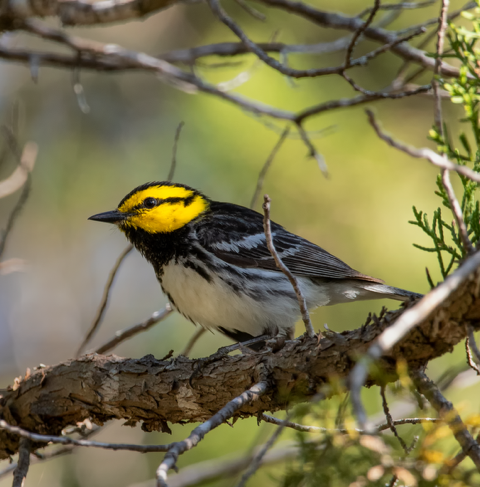
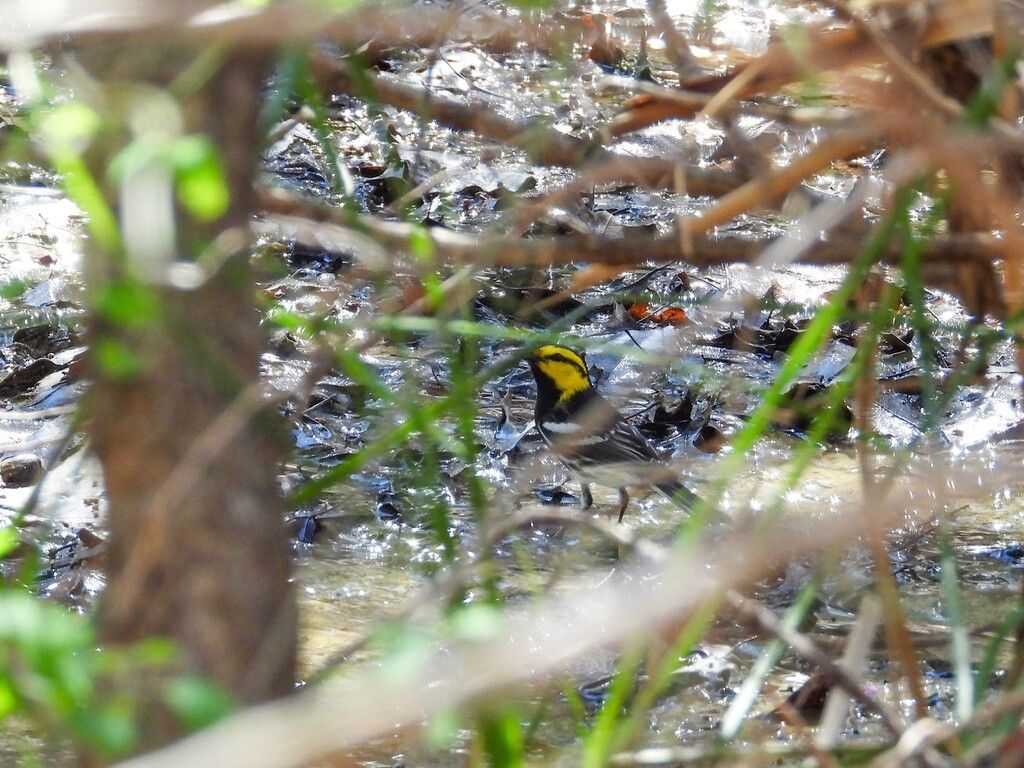
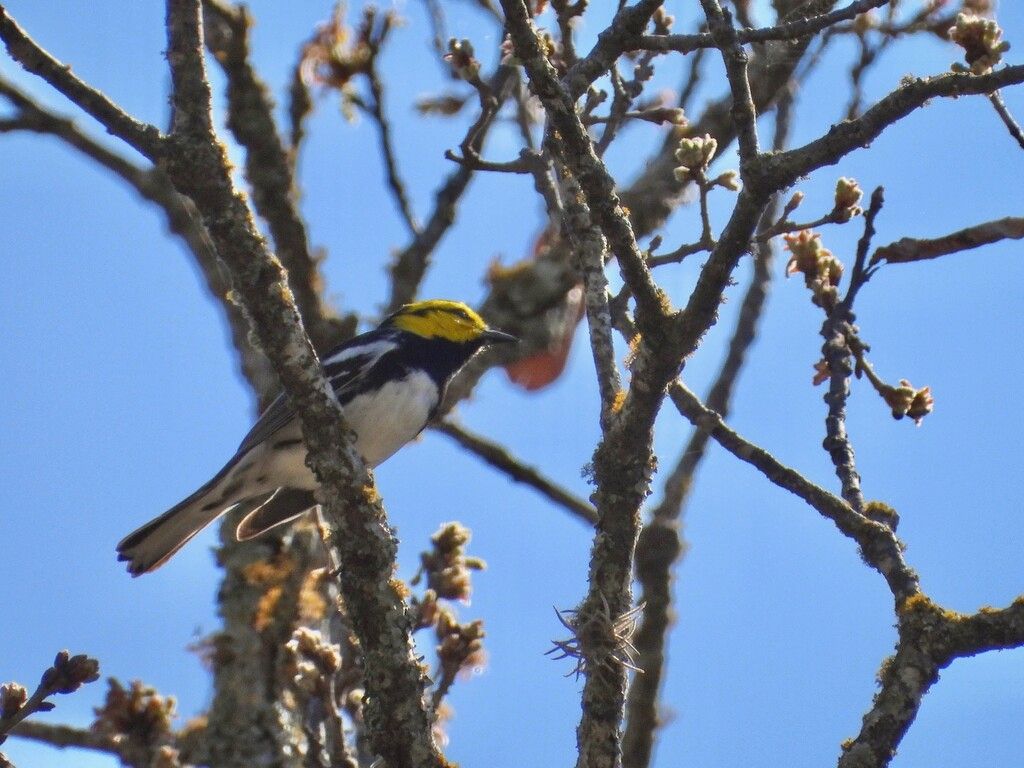
To maximize your chances of hearing and possibly seeing a Golden-cheeked Warbler look for them in March through April when the males are singing and setting up territories. The male has a bright yellow face patch with a distinct black eyeline and black throat. The underneath parts of the bird are white. They have white wing bars and black streaking on the sides. Females look similar to males but are more washed out.
- Warbler Vista is an excellent place to find them and is a public site open 365 days a year, Sunrise to Sunset. At Warbler Vista, walk the Cactus Rocks Trail along the canyon edge listening for the male’s song.
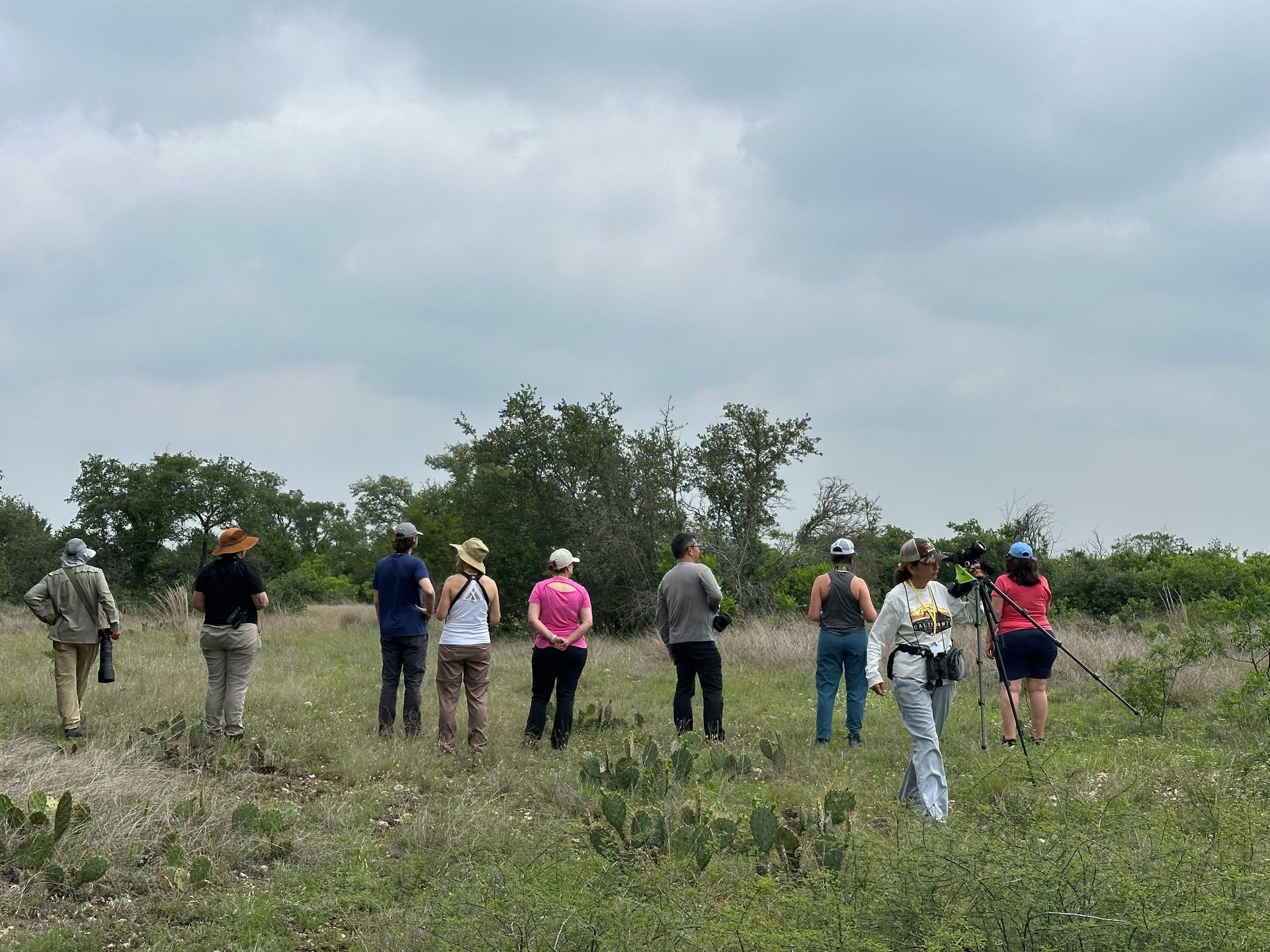
- Looking to connect with others interested in learning more about Golden-cheeked Warbler and other wildlife and plants of Balcones- join us on our Free Guided Hikes. Hurry- the Season ends May 3.
- Expert guidance - join a small group tour during Songbird Festival April 24, 25 and 26th. Friends of Balcones fundraiser and 20 Plus year event. This is your best chance of seeing/hearing a Golden-cheeked Warbler. Our expert guides scout the ideal locations for this season.
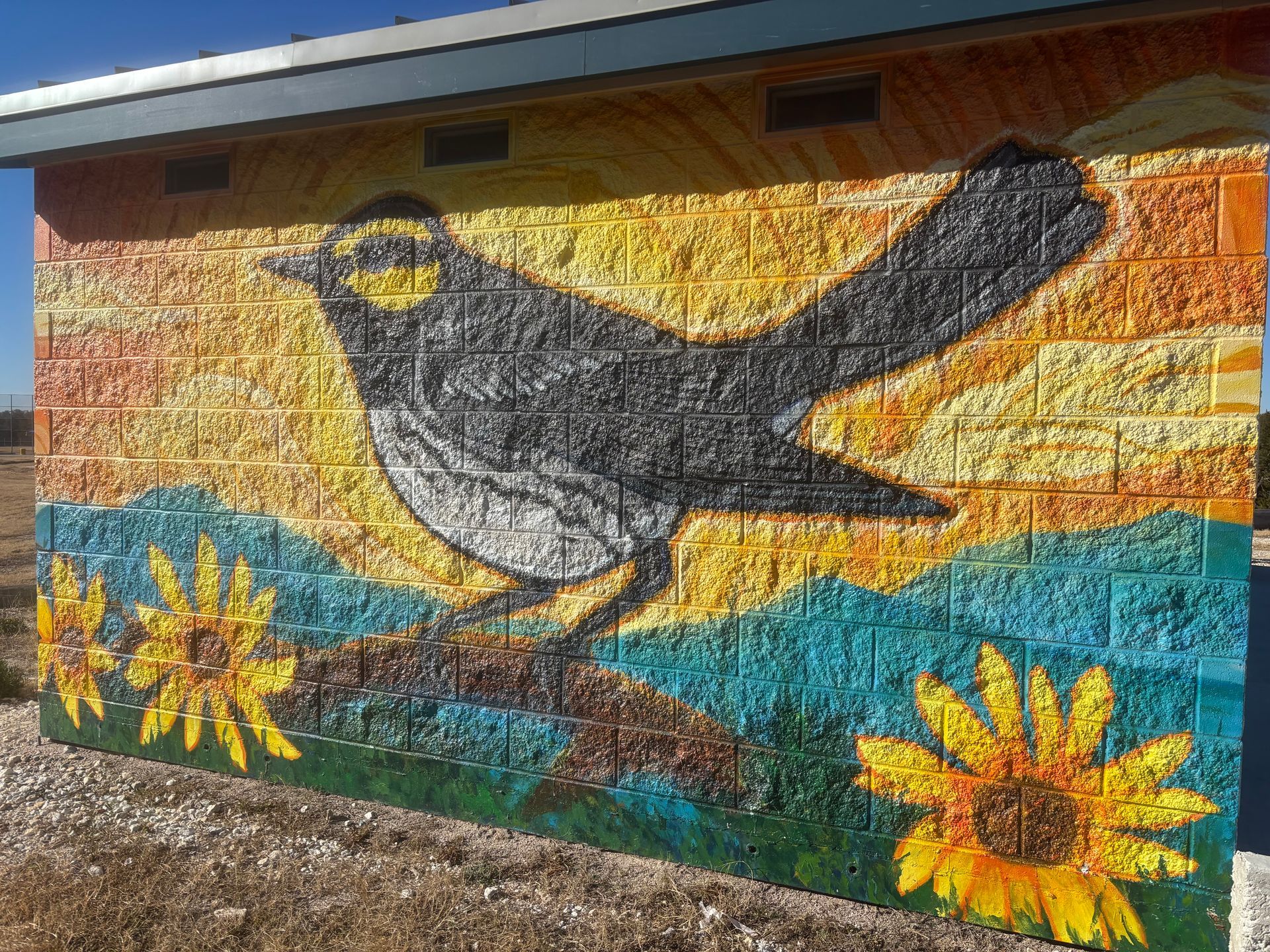
Fun tip: After a visit to Warbler Vista to listen and look for the Golden-cheeked Warbler- head across the street to get a selfie with a beautiful Mural of the bird at Lago Vista Sunset Park, RM 1431, Lago Vista, TX 78645.
Bonus! Kids can get moving on the playground or you can have a bite to eat at the Picnic tables.
RECENT ARTICLES